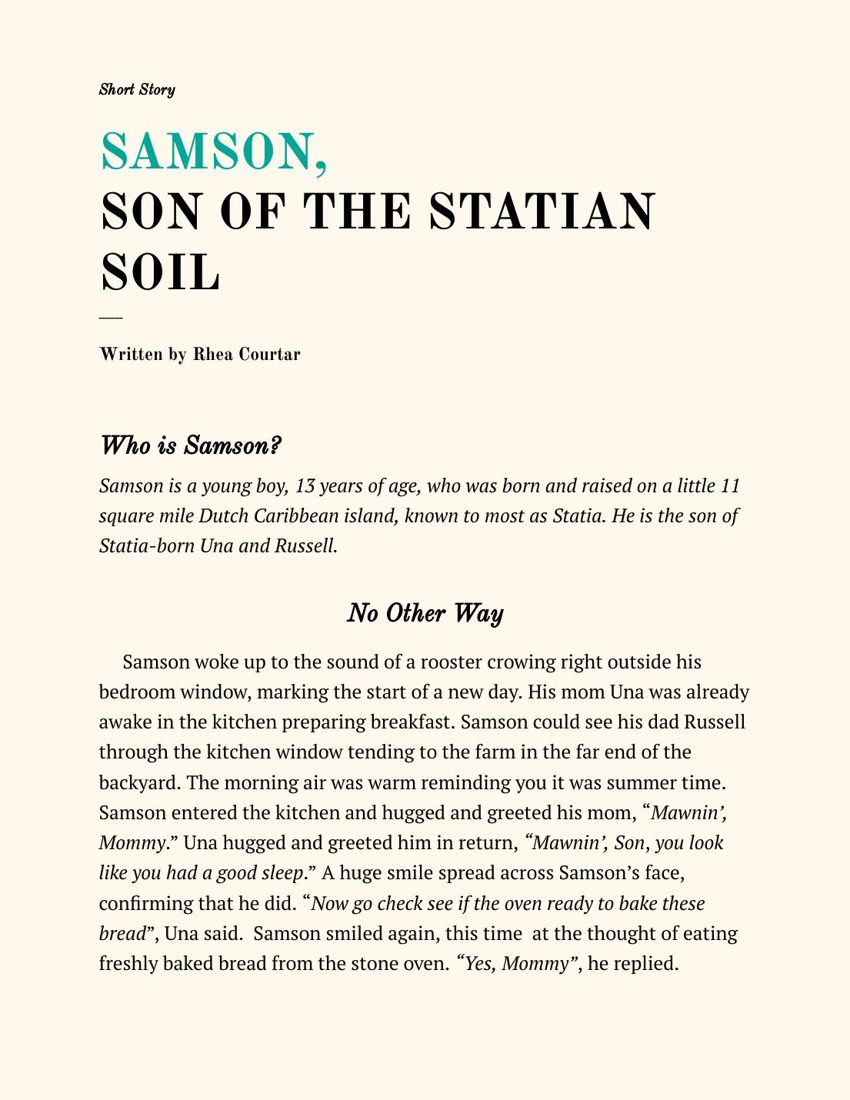
Short storyRhea CourtarSamson, Son of the Statian Soil
A winning submission to the Where Culture Lives Artist Prize. For the full work and description, visit www.wcla.com.
Watch the work →Information on programs, grants and support is not reaching the wider community. Heritage site engagement is highest on St. Eustatius (46%). Teaching and knowledge transfer stand out on the SSS islands, reaching 32% on St. Eustatius.

Each piece offers its own reflection to the question 'Where does culture live?' The works offered an impression of cultural life, highlighting everyday practices, identity, memory and different forms of expression.
A winning submission to the Where Culture Lives Artist Prize. For the full work and description, visit www.wcla.com.
Watch the work →
A poem using once-played instruments to evoke the harmony and rhythms of Statia's culture.
Watch the work →
A video on an age-old ruin as a carrier of memory, identity and continuity on Sint Eustatius.
Watch the work →
A spoken-word poem affirming belonging and the enduring strength of Statian women.
Watch the work →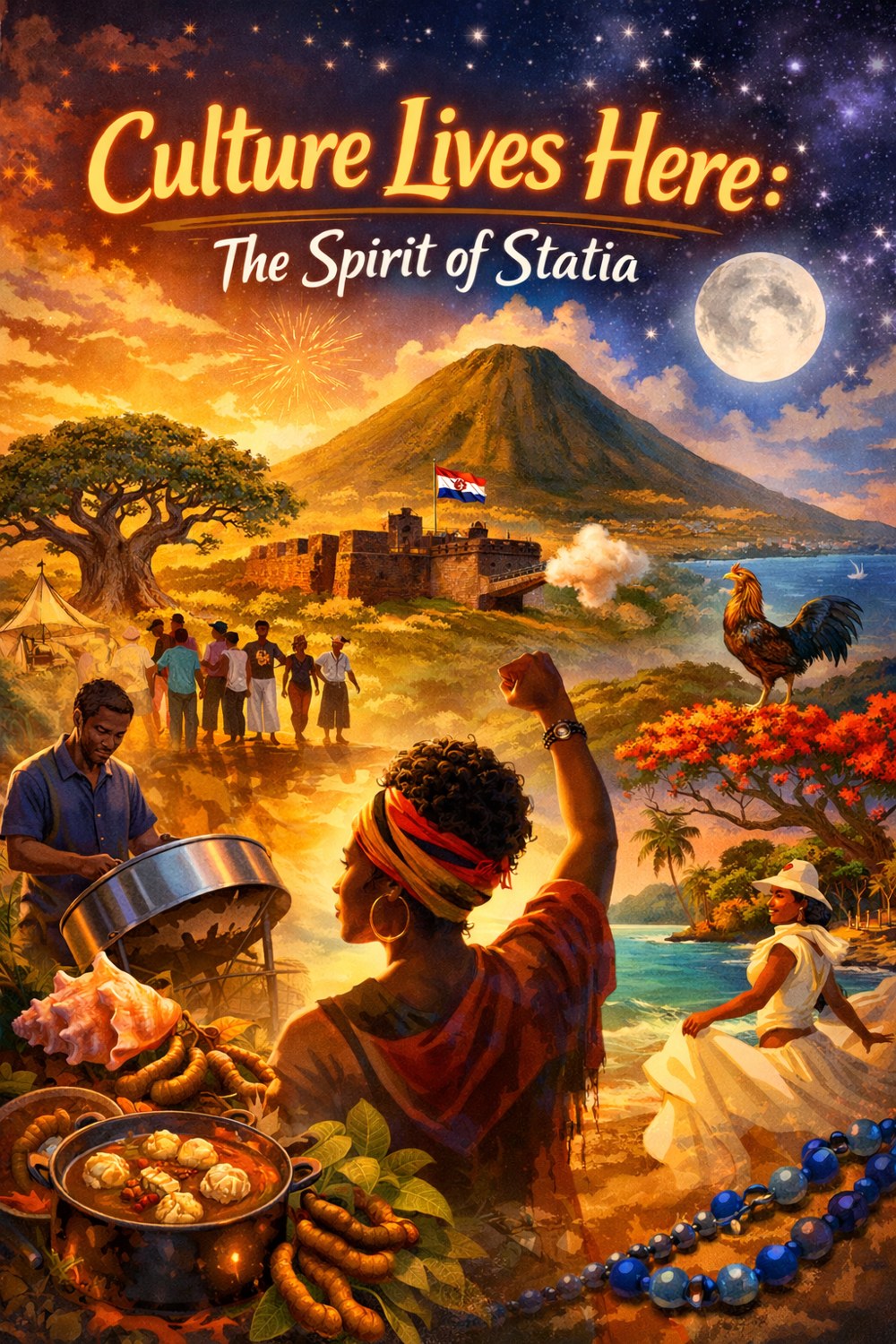
A spoken-word work — culture lives in the land, the people, the food and the daily rhythm of Statia.
Watch the work →Survey data from 41 respondents on which cultural and creative practices they have engaged in and what they are most active in.
Sint Eustatius · n=41 · Top responses
WCL survey 2026. Multiple responses allowed.
Sint Eustatius · n=41 · Top responses
WCL survey 2026. Single most active practice selected.
Discussions were organised around six research domains. Below are key findings from each domain as raised by focus group participants on Sint Eustatius.
Cultural education exists on Statia but there is a need for a standardised local cultural curriculum at all levels. Offerings depend on external facilitators and individual school initiative.
Statia has real creative vitality in singing, dance, visual arts and crafts, but support and visibility are narrowly concentrated in music and dance.
Statia holds incredible intangible heritage — Christmas traditions, Easter gatherings, food culture (pig roasting, local baking), herbal medicine, string band music and storytelling — though some of these practices are in active decline.
Carnival revival shows that community-driven revitalisation is achievable when given space and ownership. Heritage participation is growing through the Heritage Center.
The island government is the primary institutional actor, providing grants, costumes, rehearsal space and small subsidies. Funding support mechanisms exist but systematically fail to reach intended beneficiaries.
Statia's creative economy potential is linked to its heritage tourism — the island's deep archaeological profile and historical significance. Yet this potential is not yet systematically supported.
Survey breakdowns, focus-group transcripts and the full WCL recommendations are included in the final report.
Download the report (PDF) →