Dutch Caribbean Cultural Mapping Research

Where Culture
Lives

A mapping of cultural life across the six Dutch Caribbean islands — and the artists who answered one question in their own language.

Research Findings | Conclusions | Recommendations
800+ participants6 islands4 research phases 16 Artist Prize winners
Foreword

One question, asked across the creative ecosystem of our Caribbean islands

This study explored how people across the ABCSSS islands engage with arts, culture and heritage in everyday life and aimed to identify appropriate methodologies for future cultural monitoring within the Caribbean part of the Kingdom of the Netherlands.

The research applied a context-sensitive mixed methods approach that combined desk research, surveys, focus groups, interviews, validation sessions, artistic contributions and broader community engagement across all six islands. In total, 581 surveys were conducted, complemented by focus groups and extensive conversations with more than 200 cultural practitioners, educators, policymakers, heritage professionals, NGOs, artists and community stakeholders.

This research began as an assignment fueled by passion and a shared commitment: to map cultural practices across our six Caribbean islands. Yet over time, it became something more. For us as a project team, it evolved into an invitation to listen more carefully and to recognize culture not as a fixed sector, but as a living ecosystem carried by creativity, memory, resilience and imagination.

— Jorien Wuite
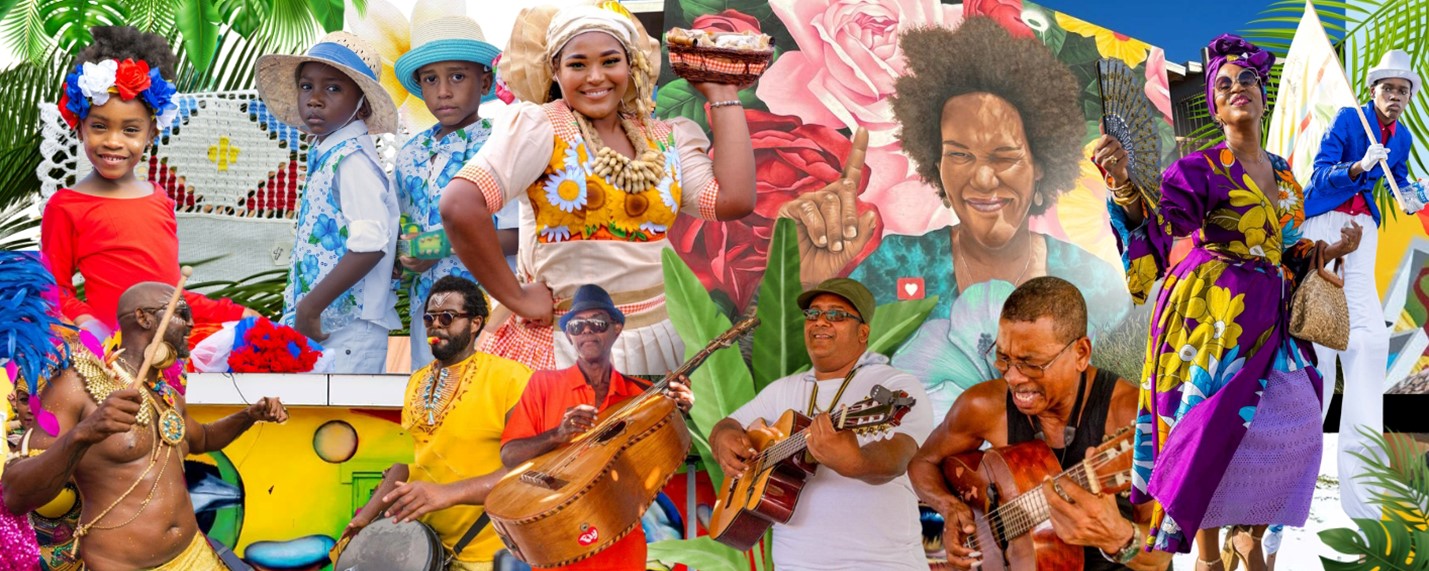
WCL project collage — moments from the field
The research in motion

The surveyed group showed that singing is the most widely practised activity on four of six islands.

The research in numbers

A baseline built from many voices

800+Research participants
·
6Islands mapped
·
4Research phases
·
25Survey questions
·
943Open-ended responses coded
·
14Thematic categories
·
130+Cultural practitioners consulted
·
32Artist Prize submissions
·
7Jury members
·
16Artist Prize winners
·
90%Festival attendance on Saba — highest
·
55%Cite funding as a challenge on Sint Maarten
·
81%Practise culture as a hobby on Bonaire
·
42%Archipelago average citing funding as challenge
·
800+Research participants
·
6Islands mapped
·
4Research phases
·
25Survey questions
·
943Open-ended responses coded
·
14Thematic categories
·
130+Cultural practitioners consulted
·
32Artist Prize submissions
·
7Jury members
·
16Artist Prize winners
·
90%Festival attendance on Saba — highest
·
55%Cite funding as a challenge on Sint Maarten
·
81%Practise culture as a hobby on Bonaire
·
42%Archipelago average citing funding as challenge
·

The survey consisted of 25 questions, most of which were closed-ended. Across the six islands, the two open-ended questions generated 943 responses in total, which were coded into 14 thematic categories. The submissions were reviewed by a 7 member jury composed of representatives from all islands.

The six islands

Six islands — the ABCSSS islands.

The six islands

900 km of Caribbean sea, with one constitutional bond

The ABCSSS islands: Aruba, Bonaire, Curaçao, Sint Maarten, Sint Eustatius and Saba. Click any island to jump to its profile.

Caribbean Sea ABC Islands · off Venezuela SSS Islands · Lesser Antilles /> Sint Maarten Saba Sint Eustatius Aruba Curaçao Bonaire

Each number is the island's share of the 581 survey respondents conducted across the six islands.

ABC cluster · 193 respondents

Aruba

45%cite funding as a challenge

Aruba presents a relatively broad exposure through music, dance, theater, visual arts and handcraft within the school setting.

DandeCarnivalPapiamento
Most practised activities
Singing or performing music · Crafts & Design · Visual Arts
WCL survey · n=166
ABC cluster · 67 respondents

Bonaire

81%practise culture as a hobby — highest

The participation rates range from 54% on Bonaire to 90% on Saba. Bonaire presents the lowest secondary motivation rates across nearly all categories, which aligns with its high proportion of hobbyists (81%).

SimadanBariPapiamentu
Most practised activities
Singing or performing music · Dance · Crafts & Design
WCL survey · n=63
ABC cluster · 165 respondents

Curaçao

33%professional practitioners — highest

Cross-island variation is greatest in cinema attendance, where Curaçao (53%) and Aruba (42%) exceed the SSS islands. On Curaçao, income generation stands out as the distinctive secondary motivation, cited by 34% of respondents, which aligns with Curaçao's significantly higher rate of professional practitioners (33%).

SeúTambúTumbaKuenta di Nanzi
Most practised activities
Visual Arts · Crafts & Design · Singing or performing music
WCL survey · n=164
SSS cluster · 75 respondents

Sint Maarten

55%cite funding as a challenge — highest

St. Maarten recorded the highest funding challenge figure at 55%. The creative sector lacks the structural conditions needed to move from project-based work to sustainable livelihoods.

JollificationCarnivalEnglish
Most practised activities
Singing or performing music · Dance · Visual Arts
WCL survey · n=74
SSS cluster · 41 respondents

Sint Eustatius

46%visit heritage sites — highest

Information on programs, grants and support is not reaching the wider community. Heritage site visits are highest on St. Eustatius (46%).

Statia DayArchaeological heritageCarnival
Most practised activities
Singing or performing music · Visual Arts · Crafts & Design
WCL survey · n=41
SSS cluster · 40 respondents

Saba

90%festival attendance — highest single rate

In Saba 78% of respondents said they promote culture in their community, 57% volunteer, 52% organise events and 52% are members of cultural associations.

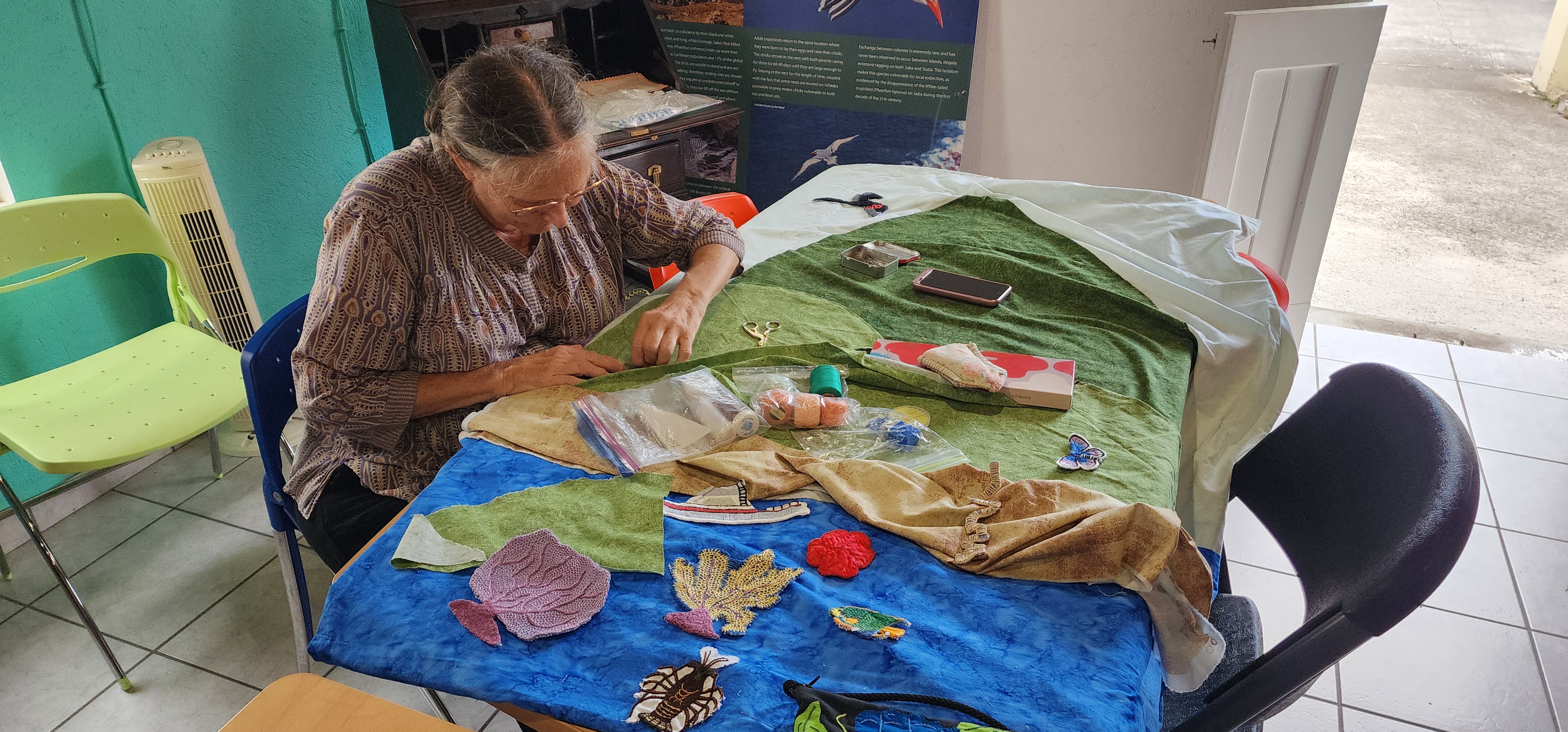
String bandMaypole danceSaba lace
Most practised activities
Visual Arts · Singing or performing music · Film & Digital media
WCL survey · n=40
The framework

Six domains of cultural life

The discussions were organised around six clustered research domains: (1) cultural education and talent development, (2) amateur arts and community-based practices, (3) intangible cultural heritage, (4) participation in heritage and culture, (5) the role of NGOs and government and (6) the creative (orange) economy in relation to tourism and policy.

01

Cultural Education (Formal)

How culture is taught, learned and nurtured — in classrooms, studios and through mentorship.

02

Amateur Arts and Talent Development

Voluntary creative practices carried out during leisure time. These may include self-directed or organised activities such as music groups, theatre, visual arts classes or dance workshops, emphasizing personal engagement in the creative process.

03

Intangible Cultural Heritage

Living traditions, knowledge and skills that communities recognize as part of their cultural identity, including oral traditions, rituals, performing arts and craftsmanship.

04

Culture and Heritage Participation

How residents attend, visit, volunteer and take part — festivals, concerts, cinema, heritage sites.

05

Supporting NGOs and Government

The role of NGOs and government in relation to arts and cultural practice across the ABCSSS islands.

06

Creative (Orange) Economy

The creative (orange) economy in relation to tourism and policy across the ABCSSS islands.
Critical observations · Chapter 4.2

Chapter 4.2 — Critical Observations

Observation 01

Culture as a living vibration

Arts and culture across the ABCSSS islands function as a "living vibration rooted in our Caribbean belly," as David Rudder's calypso powerfully captures. Culture is not confined to formal institutions, policy sectors, or artistic industries alone; it lives through language, memory, storytelling, music, food, ritual, movement and everyday social interaction.

Observation 02

It takes a village — and a jack of all trades

Cultural life across the ABCSSS islands is sustained largely through community resilience and grassroots leadership. Many practitioners simultaneously function as creators, educators, organizers, fundraisers and advocates simply to sustain cultural life, much like a "jack of all trades." What is often celebrated as resilience also reflects structural absence.

Observation 03

Gimme room to dance

"Gimme room to dance," a familiar expression within the Caribbean carnival space, becomes symbolic here, as it reflects a plea to clear the way so people can be free to dance. Communities are already creating, teaching, organizing and transmitting culture, often with limited means. What they increasingly demand is room: room to sustain culture, develop talent, safeguard heritage and build long-term cultural ecosystems on their own terms.

WCL Artist Prize

“Where does culture live?” — sixteen artists answer.

WCL Artist Prize

Sixteen artists answer the same question

Each piece offers its own reflection to the question 'Where does culture live?' The works offered an impression of cultural life, highlighting everyday practices, identity, memory and different forms of expression. Across all islands, a total of 32 submissions were received, spanning visual art, photography, spoken word and multidisciplinary works. The submissions were reviewed by a 7 member jury composed of representatives from all islands.

32submissions across the six islands
7jury members
16winning works — poems, film, paint, craft

Aruba

3 winners

Bonaire

1 winner

Curaçao

3 winners

Saba

3 winners

Sint Maarten

3 winners

Sint Eustatius

3 winners
Looking ahead · Chapter 4.3

Where the research points next

01

Rethinking Arts and Culture in the Caribbean Context

It is recommended, first and foremost, to rethink arts and culture within the specific realities of the ABCSSS islands and the wider Caribbean context. This requires moving beyond narrow definitions of culture and instead examining how people in the Caribbean engage with culture, experience it and assign meaning to it — as "a living vibration." In the Caribbean, culture is deeply embedded in languages, food, music, oral traditions, spirituality, carnival, community-based practices and many other experiences shaped by regional histories, colonialism, transatlantic slavery, indentureship and migration. At the same time, these cultural realities are shaped by the constitutional, political and institutional framework within the Kingdom of the Netherlands. Future cultural policy and monitoring systems should therefore recognize this duality: simultaneously Caribbean and Kingdom-based. This implies the continuous development of culturally relevant domains, indicators and methodologies that reflect the lived realities of Caribbean societies rather than relying solely on particular models of "cultural measurement." In addition, there is a strong need to strengthen sustainable regional cultural networks and partnerships across the Caribbean, both within and beyond the Dutch Kingdom, including with South American countries and West African regions that share related historical and cultural trajectories.

02

Contextualized Mixed Methods Research Approach

The second recommendation builds upon the first. Based on the idea of a reconceptualization of what arts and culture could mean within the context of the ABCSSS islands, it opens up possibilities for developing a methodology that is more reflective of the lived realities, cultural expressions and social dynamics of the region. The findings of this study suggest that a contextual mixed methods approach is the most appropriate methodology for cultural monitoring within the ABCSSS islands. Similar to the methodology applied in this research, a phased design — combining desk research, focus groups, surveys, site visits and validation sessions — is essential to ensure that the monitoring process remains grounded in local realities and cultural dynamics. Particularly important is the inclusion of site visits and ethnographic observation, which create opportunities to directly observe everyday and lived cultural expressions that are often overlooked in standardized research. This approach recognizes that arts and culture within the Dutch Caribbean cannot be adequately understood through standardized quantitative indicators alone. Rather, cultural monitoring must incorporate both quantitative and qualitative methods that capture the relational, embodied, oral, performative and community-based dimensions of cultural life.

03

Proposed Monitoring Timeline

It is proposed that this cultural monitoring cycle be repeated every three to five years. Each completed cycle would contribute to a progressively deeper understanding of the cultural ecosystem of the islands and support the development of increasingly refined and appropriate methodologies for the region. Culture is never static — cultural expressions, technologies, social practices and creative industries continuously evolve, and monitoring systems must therefore remain flexible and adaptive. The findings further suggest that in areas where data is particularly lacking, such as the creative industries or digital culture, more exploratory research processes may initially be required to establish usable baseline understandings. A long-term commitment to monitoring will allow policymakers, cultural practitioners and communities to track change over time and to respond more effectively to evolving needs. Repeating the research also creates opportunities for genuine co-ownership: for communities to see the findings return, to validate them and to shape the questions that come next. Over time, this iterative process will strengthen the cultural monitoring system itself and deepen the shared understanding of where culture lives across the islands.

Colophon

The people behind the research

Commissioned by

Ministry of Education, Culture and Science (OCW), with RCN.

Research & consultancy

Lemonade BV.

Project team

Jorien Wuite · Gregory Richardson · Ludmila Duncan · Elton Villarreal.

Island coordinators

Maria-Liz "Liesje" · Ashayna · Sharifa · Paula · Elton · Gregory · Ludmila · Lara.

Knowledge partners

Boekman Stichting · NAAM · University of St. Martin.

Data analysis

Rainier Kock.

WCL Artist Prize Jury

Chaired by Jerry Gumbs — seven members representing all six islands.

Website

Ian van der Kooye